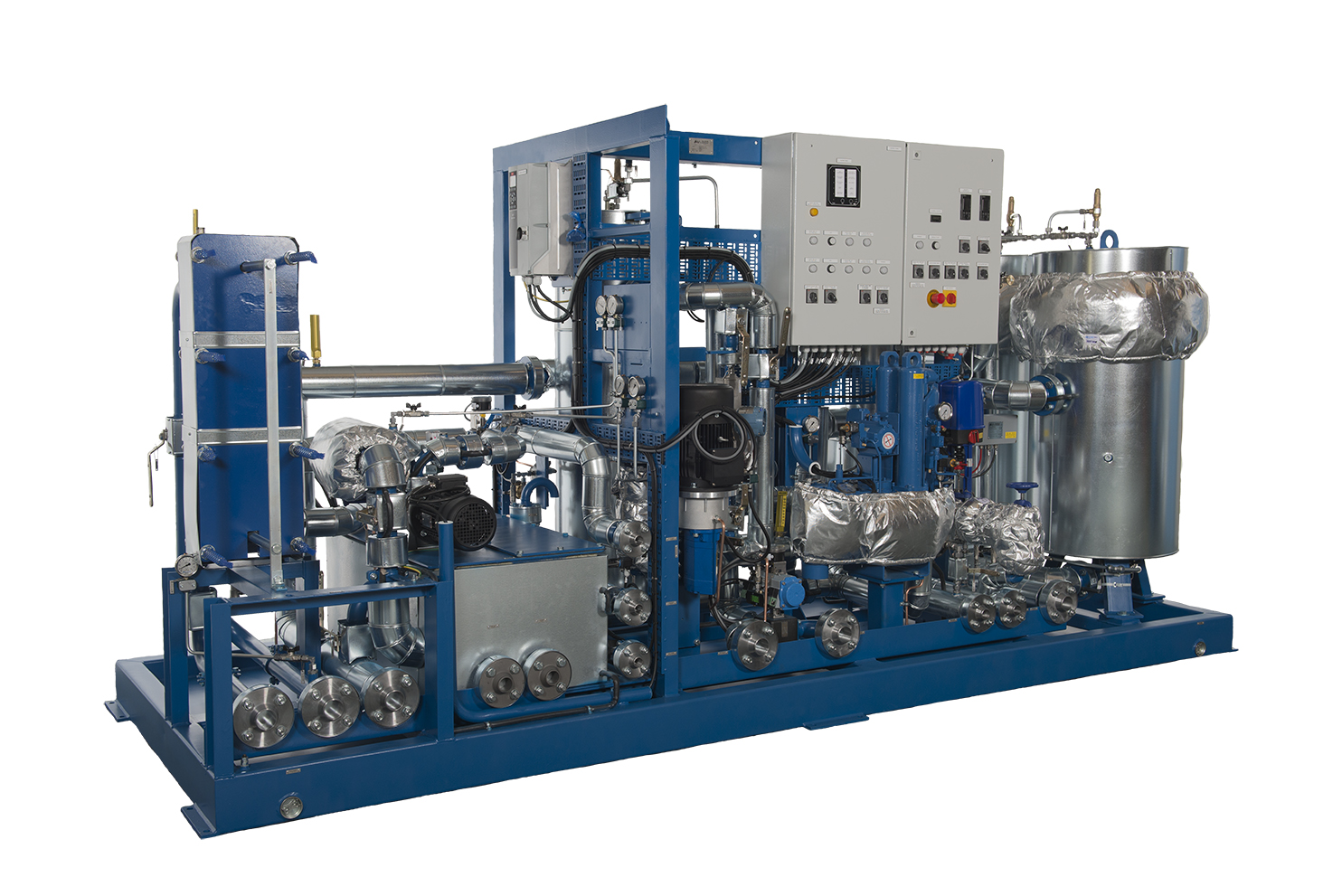
FUEL OIL SUPPLY UNIT (HFO)
Built to perform. Engineered to engine-specific requirements.
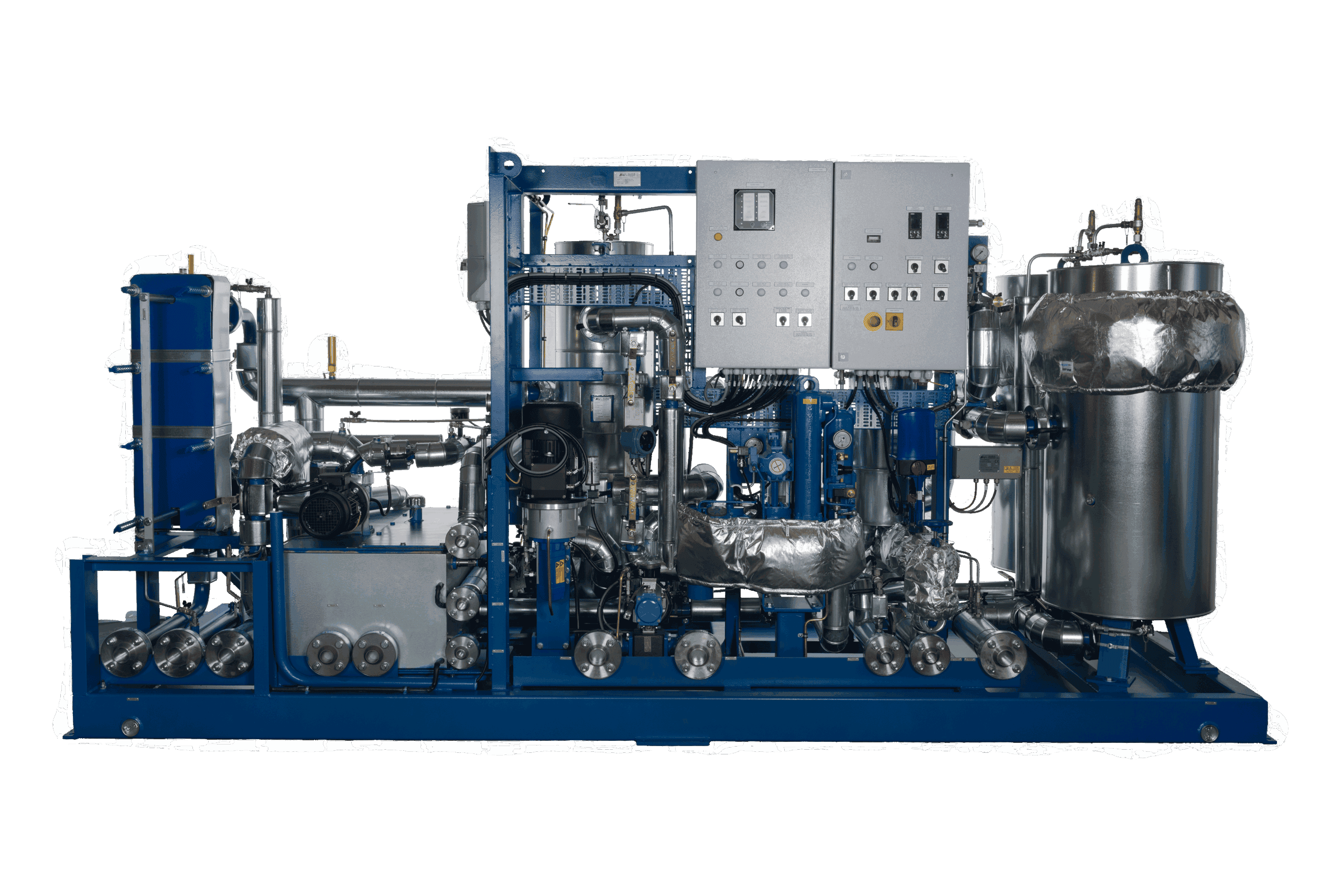
Auramarine's heavy fuel oil (HFO) fuel supply system delivers precisely conditioned fuel from tank to engine, combining pumping, heating, filtration, cooling and control in one coordinated unit. The system is engineered for marine vessels and power plants running on HFO, keeping fuel properties within the engine's target range at every load condition.
Precise heating and viscosity control
Fuel viscosity has a direct effect on combustion quality and engine wear. The system's heating stage brings HFO to the correct viscosity before injection, with automated control adjusting to load changes and ambient conditions. This keeps combustion stable and reduces the risk of fuel-related engine damage.
Filtration and cooling for safe fuel handling
Integrated filtration removes particulates and contaminants before the fuel reaches the engine, protecting injectors and reducing maintenance needs. Cooling stages manage fuel temperature where required, supporting consistent fuel quality across varying operating conditions.
Built for the multi-fuel future
As fleets and plants adopt new fuel strategies, HFO often remains part of a multi-fuel setup alongside MGO or emerging fuels. Auramarine designs its HFO systems to fit into wider fuel supply architectures, supporting fuel changeover and coexistence with other fuel types without compromising reliability.
KEY DESIGN PRINCIPLES
BUILT FOR RELIABLE HFO FUEL HANDLING
Auramarine Fuel Oil Supply Units combine modular design, integrated safety functions, and flexible configuration options to support reliable HFO fuel operations across a wide range of marine and power plant applications.
Factory-tested solutions help reduce commissioning effort while ensuring safe and predictable system performance throughout the vessel lifecycle.
modular design for different engine setups
The Auramarine HFO fuel supply unit's modular architecture is engineered to engine makers' specific requirements, accommodating different pipe sizes, capacities, and installation constraints across 2-stroke and 4-stroke engine types and other consumers, without custom engineering.